What is Aquaponics & How Does it Work?
Key Themes and Information
Aquaponics is the combination of two food growing systems for form a productive, symbiotic polyculture. The first being aquaculture, which is the raising of fish in a controlled environment, and the second being hydroponics, the growing of plants in a soilless medium using nutrient rich water.
Nitrifying bacteria convert excreted ammonia into nitrite then into nitrate. Nitrate is safe for fish at levels found in well maintained aquaponics systems and is also a form of nitrogen readily taken up by plants. These bacteria are the "backbone" of the aquaponics ecosystem.
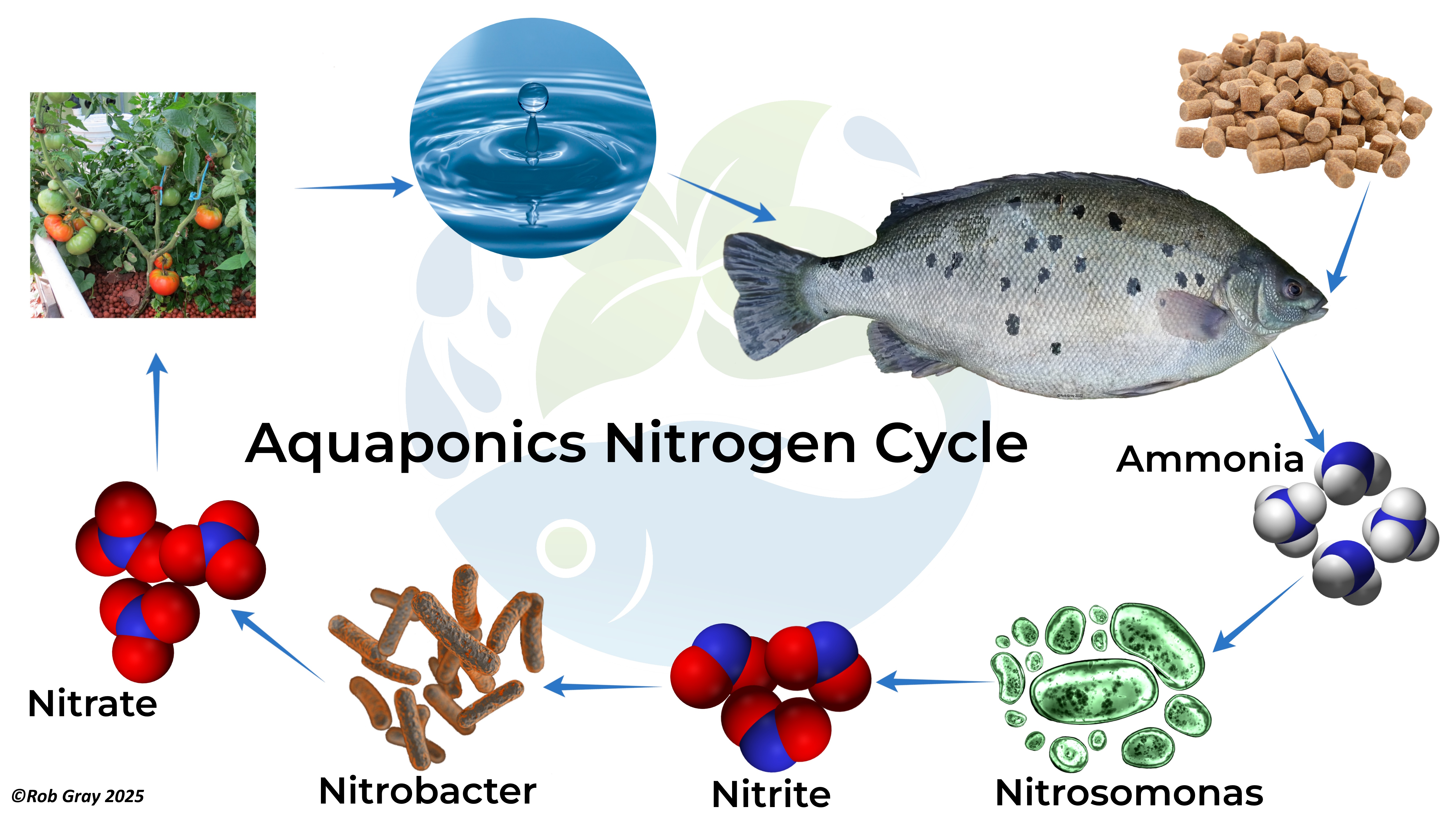
The Aquaponics Nitrogen Cycle
1. Fish produce ammonia-rich waste.
2. Nitrosomonas bacteria oxidise ammonia (NH3) and ammonium (NH4) to nitrite (NO2).
3. Nitrobacter bacteria oxidise nitrite (NO2) to nitrate (NO3).
4. Plants will absorb nitrates (NO3) as nutrients.
5. Cleaned water returns to the fish tank, completing the cycle.
"What Plants Can I Grow?"
The topic of plants will be touched on in a later lesson in more detail. Aquaponics is great for growing most vegetables grown in backyard soil and hydroponic gardens.
Leafy greens would be the most grown plants as they thrive in the nigh nitrogen water of an aquaponics system. Stand out greens varieties are lettuce, spinach, rocket/arugula, chard/silverbeet, brassicas (kale, broccoli, cauliflower etc) and Asian style greens (bok choy, choy sum, mustard greens and Napa/wombok cabbage) with some growing much faster in aquaponics compared to soil garden beds.
Herbs such as basil, parsley, sage, and thyme also grow well. Caution must be taken with mint and cress varieties. Some of these can grow extremely fast, sending out runners that take over grow beds in no time flat.
Fruiting plants like tomatoes, peppers/capsicums, chillies, eggplants/aubergines, cucumbers, and peppers can be grown but may require a more “mature” system due to their higher nutrient demand.
Shallow rooted root crops, like beetroot and radish, also do well in the media beds. I have grown shorter varieties of carrots, like Short Kuroda, with success. Longer carrot varieties experienced gnarly deformities due to pressure on the roots from the clay balls, as did the Daikon radish grown in the media beds.
Fish Varieties for aquaponics
The topic of fish selection will be touched on in a later lesson in more detail. For now I will leave you with a few key points and species examples.
Species selection is highly dependent on location/climate, local laws and regulations.
Temperature tolerances of fish species are varied so what thrives in a warm climate, like barramundi or jade perch will not necessarily survive in cooler regions, where trout or carp varieties might be more suitable.
Tilapia is used in many countries around the world but is illegal in all Australian states and a few in the USA as well.
There are two main categories of fish used in aquaponics, table and ornamental fish. Both generate waste and can be used to supply nutrients to grow vegetables.
Popular table fish include tilapia, barramundi/Asian sea bass, blue gill, with various catfish, carp, trout, perch, salmonoid/trout varieties.
Popular ornamental fish include goldfish, koi, guppies, gudgeons, rainbow fish and many others that you can find at your local aquarium supplier.
Challenges and Considerations to Consider
Initial Cost: Setting up an aquaponics system can be costly if you purchase pre-made systems and components. However, building DIY systems using recycled materials can lower expenses significantly.
This is where folks with handyman skills can save themselves a substantial amount of money. There are recycled tank and drum alternatives, such as caged IBC totes, buckets, carry totes, etc., that can be used to create the different components of your aquaponics system.
Media Costs: Grow bed media, like the clay balls I have used, can be costly, but cheaper alternatives are available worldwide.
Light media alternatives include volcanic rock/scoria, expanded shale and pumice but tend to be more expensive that natural rock medias.
Heavier rock-based medias do not require processing so tend to be much cheaper. Popular rock grow medias include river rock, basalt (what we call “road base”/blue metal in Australia), coarse sand (in some specialised systems)
Power Requirements: Constant power is required to run pumps for water and air circulation in most aquaponics system configurations. Solar or any “green” form of power can be used for to increase energy efficiency. Many “off grid” systems are bowered by either 12 or 24V water and air pump systems.
Fish Feed: The need to buy commercial fish feed can be a limiting factor for some due to location and cost. Some have overcome this hurdle by growing and raising their own alternative feed sources. These feeds have included duckweed, azolla, salad greens, compost worms, black soldier fly larvae, meal worms, crickets etc.
Benefits of Aquaponics
Water Conservation: Aquaponics uses significantly less than soil gardening as the water is recycled continually. Some have suggested that it uses up to 90% less water than commercial farming however I think that percentage would be realistically lower for backyard growers. The only exception may be individuals utilising water efficient gardening systems such as wicking beds. In saying that, it is very hard to grow a fish to toss on the BBQ in a wicking bed. 🤔
Organic Growing: Due to the sensitive nature of fish, harsh chemical pesticides cannot be used in aquaponics. As such the veggies grown in aquaponics will be some of the “cleanest” you will ever eat. Your plants do not need to go unprotected as alternative treatments and strategies are available for use in aquaponics, these will be discussed in a later lesson.
Sustainable Food Source: Growing your own fish to toss in the pan or on a BBQ is not only a satisfyingly tasty accomplishment for the home grower, but it also helps to reduce our reliance on ocean-caught fish. There is increasing concern among individuals about the presence of contaminants in wild-caught fish. By growing fish in your own backyard you can be safe in the knowledge of what they have consumed before harvesting for the plate.
Faster Plant Growth: Hydroponic growing conditions lead to accelerated growth with leafy greens growing up to 40-50% faster than those in traditional soil gardens.
Reduced Weeds: Aquaponic systems are weed-free although if the system is outside you may get the odd seeds “deposited” by passing wildlife. The major “weed” we have had to deal with in our systems are the self-sown lettuce plants that can carpet the grow bed. These can be transplanted for growth in a better position of fed to the fish if veggies are part of their natural diet.
Accessibility: Most aquaponics grow beds are elevated to allow for plumbing and the use of sump tanks. Having the beds raised makes it easier for individuals with mobility issues to tend to them.
Space Efficiency: Raised grow beds can offer improved sun exposure in confined spaces like courtyards, which typically lack sufficient sunlight at ground level for healthy plant growth. They can also be made compact enough to fit inside basements, garages or greenhouses for those that live in colder climate allowing them to extend their growing seasons.